
Rachel Carey and David Koch talk founding Allara, building Zoomly, Self Development and Business
About this interview
Rachel Carey sits down with David Koch to talk about the road from a traumatic upbringing to founding Allara Support Services, a supported independent living (SIL) provider in New South Wales.
She covers the imposter syndrome she calls the monkey on her shoulder, the personal development work behind her leadership, hiring a C-suite after burning out in 2024, and why Allara chose to do one thing and do it well.
She also tells the story behind Zoomly: a friend who uses a wheelchair couldn’t get transport to a business breakfast after three weeks of trying, and she decided to build the fix herself.
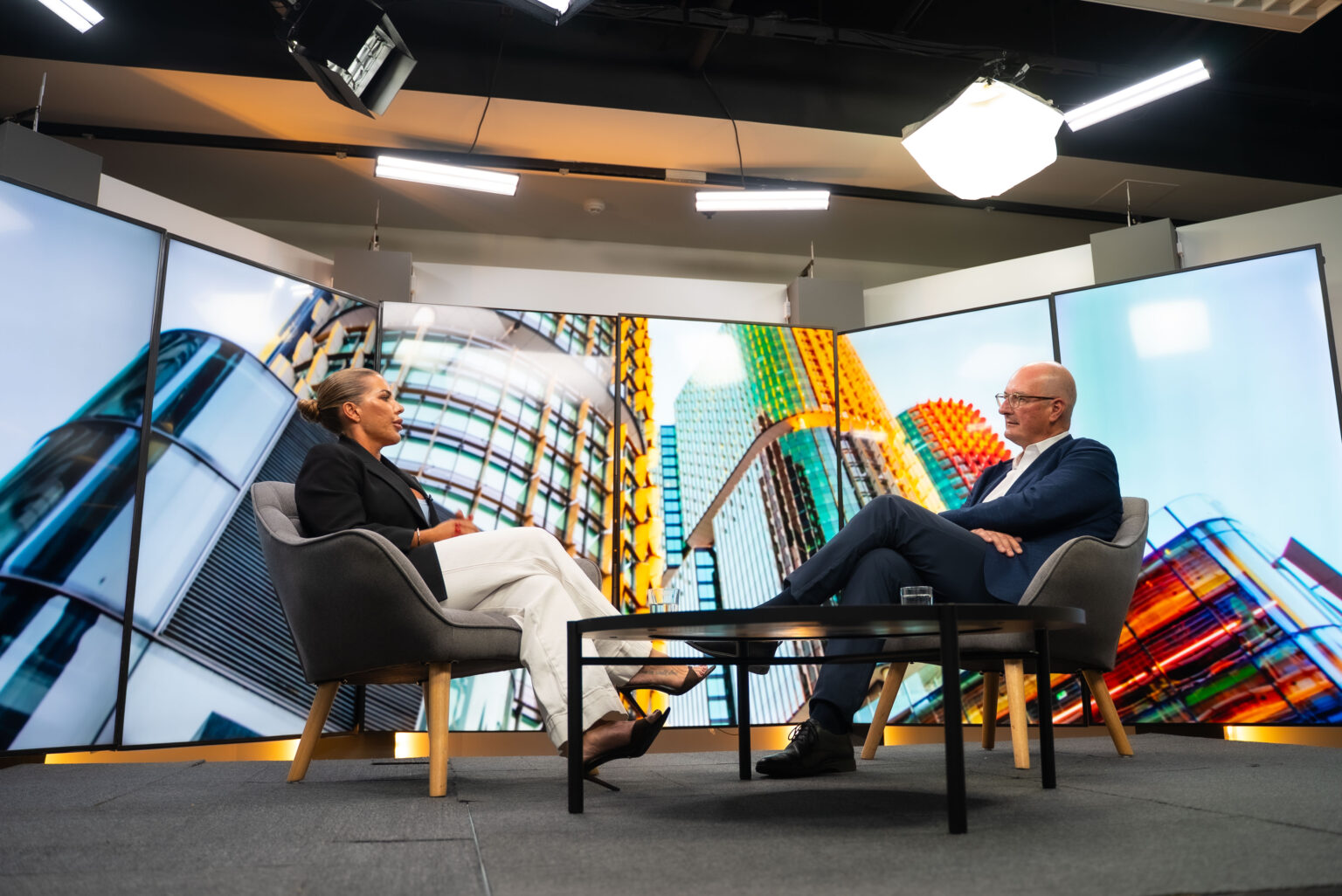


On set with Kochie
I’m just part of the problem unless I do something about it too.Rachel Carey, on starting Zoomly
Full transcript
Lightly edited for readability. Timestamps match the video.
Read the transcript
Thanks for having me. So nice to meet you.
Great to meet you, Rach. What a story you’ve got. Tell us about the business and the app you’re developing.
So I’ll tell you a little bit about Allara, which is my primary business that I run. I’ve been working in disability for about 20 years. I got called a veteran the other day, which was hilarious. I started off after having quite a traumatic upbringing, as we were just discussing, and after I overcame all of the adversity from drugs and abuse and all of that kind of thing, I came out the other side, and I asked my mum, “What should I do with my life?” And she said to me probably one of the most profound things: “Why don’t you use your lived experience to give back and do something meaningful?” Firstly, I never thought anybody would give me a job. But I landed a job as a disability support worker in a group home, and I always say that I thought I was there caring for them, but they were the ones that were shaping me and truly changing my life. For the first time in my life, I finally felt like a good person, after not feeling like a really great person for a long period of time. So I owe my entire life to the disability community: my three beautiful children, and the life that I’ve created. I started working in the sector then, mostly in group home accommodation with people with quite complex needs, and I worked my way up the corporate ladder through that time. It was when I was off having my firstborn, Bella, and I’d worked three jobs, and I was like, “What am I gonna do?” So I decided to open Allara, which is my NDIS business that I registered when I was off on maternity leave. And the reason I opened that organisation is because, quite frankly, housing for people with disabilities was diluted to shared accommodation. I thought we needed to create more innovative ways for people with disabilities to live. So that’s what I wanted to do.
It sounds easy when you explain it like that, but I couldn’t help but think, “Wow, that took a big step to go from working in a support network to starting your own business.” What sort of support did you build around yourself in terms of business mentors, processes, partners, that sort of thing?
Well, I often think that I’m so grateful for all of the adversity that I went through in my younger life, because it created what I refer to as the mongrel inside of me, and that was the starting point. It was the need to prove everybody wrong, and prove that I could do something with my life. So that was step one. Then throughout my career, I just worked really hard, and I took all the shots at all of the mentors that I wanted to work with. I asked my general manager to be a mentor for me. I went to Tony Robbins’ UPW. I did all of the personal development.
So did you have a plan in your mind?
No, no plan. Oh my goodness, no plan at all.
So it evolved over the period?
Yes, absolutely. Throughout my career, I just took every opportunity I could and worked really, really hard. And when I started Allara, I essentially translated all of my learnings from my corporate career, having no tertiary education or anything, just the grit and determination to work really hard, and to be mentored by people and learn from people that had walked the same walk before. When I started Allara, that’s when I really invested in coaches and mentors, and I’ve since spent hundreds and hundreds of thousands on coaches and mentors. Not so much strategic and business support, but more around who I needed to become, and the limiting beliefs I needed to overcome to be the type of leader I wanted to be.
So tell me about that.
Well, I suppose I was riddled with imposter syndrome when I started Allara. There was this quiet little, I call it the monkey on my shoulder. Whenever you’d try and do something, whether that was starting Allara initially, or opening the first group home, or going out and talking to your first potential client, or speaking in front of people, or even now, speaking in front of you, the little monkey comes up and is like, “How could you do this? Who do you think you are? You’re still the child from your trauma,” and all that kind of stuff. So what you have to do over time, and what I’ve worked on with coaches through a bunch of different modalities, is talk to my ego, talk to my inner child, and do all of the personal development work, whether it be through breathwork or NLP or hypnotherapy or what have you, and just work through all of your own internal stuff.
So what sets you apart from others in the industry? What do you bring? What’s unique?
Well, there’s a couple of things. Allara is the supported independent living specialist. For those of you who don’t know what SIL is, that’s the acronym, it’s basically 24-hour care in some type of residential care setting. Under the NDIS, there’s a whole bunch of different registration groups and services you can offer, and I made the really conscious decision early on to do one thing and do it really, really well. That is to provide 24-hour care to people with quite complex needs, and I wanted to do that through creating innovative housing models. So rather than just offering people with disabilities a traditional group home, I wanted to create innovative housing solutions where they could still receive 24-hour care, but not have somebody in their face all of the time.
So involved in the infrastructure as well.
Correct. So we were able to do things like what we refer to as the vertical model, where we have an onsite concierge service, which sounds a bit sexy. Essentially, people can access 24-hour care through an onsite apartment. They can buzz when they need support, and somebody will go up and give them a hand, whether it’s a transfer or personal care, collecting their mail, helping them set up for work, whatever it is for them. And that’s just one of multiple different innovations we’ve done within the housing space.
So how many people are working in the organisation?
We’ve got just over 400 staff, in five years.
My goodness.
Yeah. So many amazing people in the family of Allara. And we have about 40 homes, or SIL services, because some of them range from one individual to 20 individuals, depending on the type of housing they live in. So we have about 40 across New South Wales, and we grow by about eight services per year.
So how do you keep the culture within Allara? You would have moulded Allara around your values and personality. How do you protect that when you grow so quickly?
Yeah, that’s a really great question, and I think you nailed it when you said values. When I started the business, I created a set of values in order to get NDIS registration. That’s just the truth. They were a bunch of words on a piece of paper that didn’t really mean anything. As I’ve grown, I’ve created actual values that represent us as a business, and I brought in my team members and asked, “How do we live and breathe our values within the organisation?” And now we live within that value system. For example, one of ours is “nothing about you without you”. That means the participant is the driver of their own life, as every individual should be, and we won’t make decisions about them without them. So when we onboard our staff, we make sure they know they’re not to make decisions on behalf of somebody. When you take a participant out shopping, they can tell the shopkeeper what they want to buy. That’s just one example. We really try to embed the values into our business.
And what’s your focus as the organisation’s grown? You can’t do everything. Have you built a team to plug the gaps in your knowledge, your abilities? Because there’s no one person that can look after every part of a business. Like, I’m a big picture person. I need details people around me.
100%. I figured that out a little bit too late, I think: that I was the innovator, not the implementer, and definitely the big picture girl as well. One of my biggest personal development moments in my career was when I went through burnout in 2024 and realised I needed support around me, and that’s when I decided to bring on a C-suite executive team. And again, that little monkey was like, “If you bring on all of these really smart people who’ve worked in big corporate gigs and have the tertiary education, you’ll be found out.” What I quickly realised is it had the opposite effect. It elevated me and my business. It allowed me to work in my genius zone, and my business and the participants we’re so fortunate to serve were even better off because of the people in my business.
You talk about your genius zone. What’s that?
I always say that everybody should operate within their genius zone. For me, that’s being the innovator. To innovate, I need creative space, and I can’t do that if I’m bogged down in my emails. So what I really like to do, across any of the businesses I’m fortunate to be a part of now, because there’s a few, is be strategic and set the direction, and gather people around a common cause and inspire and motivate them. That’s where I feel I have the most impact. I also want to become a thought leader in our space, and be able to do interviews such as this. So I had to get out of my own way, sit in my genius zone, and then get other people to plug those additional gaps.
So what does the future pathway look like?
I always refer to us as the Louis Vuitton of SIL, and we’ll continue to do that and do it really well. Our primary focus is making sure that people have extraordinary lives, and we’re just there to support them. So we keep a focus on our customers’ experience with us and seek feedback, and we want to keep creating innovative housing models where people can live truly independently, where that’s what independence looks like to them, with the support around them to thrive.
And development for you? What’s the future?
Oh, development. Oh God, that’s a really hard question. My whole goal in life is to impact lives, Kochie. Can I call you Kochie?
Yeah, of course you can.
My goal is to impact lives. I’m fortunate enough to do that through Allara and the people we directly serve in that business. But long term, I want to find bigger ways to have more impact, whether that’s across our sector through education, or through Zoomly, our app, or through any other business I can work alongside, support or invest in. As long as I can impact lives and make a difference in my community, particularly the disabled community, that’s all I want to do in life. So wherever that takes me.
Tell me about the app.
Okay, well, thank God you asked. Let me tell you. In 2024, I was having lots of conversations, particularly with NDIS participants, about their limited access to transport, and those conversations were becoming more and more frequent. Then I wanted to take a friend of mine, who’s a wheelchair user, to a business breakfast with me, to present to a bunch of business owners on how to make your workplace more accessible, because I think that’s important. We tried for three weeks to get this gentleman transport. We tried multiple different service providers. We had to call three weeks in advance, and we still couldn’t get access to transport. So we ended up recording an interview together and presented that at the business breakfast, but he missed out on the opportunity to present in person as someone with lived experience. That’s just one example of how people with disabilities in this country have resigned themselves to staying at home. I was having too many of these conversations, and I said to myself, “Someone’s got to do something about this.” And then finally I thought, “I’m just part of the problem unless I do something about it too.” And that’s where Zoomly was born.
So what we’re creating is an app. We’re just about to hit our MVP. It’s an app where people with disabilities can use their NDIS funding to access transport like you or I would, on demand, through an app, which is mainstream for any Australian, so they can access the community as independently as possible.
Wow, that’s fantastic. Because mobility is the secret to independence, isn’t it? And freedom. And it’s not just physical, it’s emotional, it’s psychological, that sort of freedom.
Absolutely.
You’re certainly in your genius spot there, with innovation and setting trends. All the very best with it, and thanks for chatting.
Thank you so much.